

Location
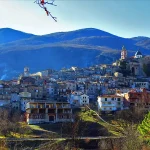
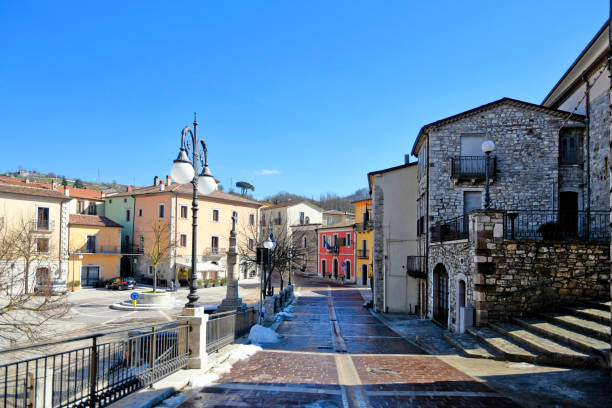
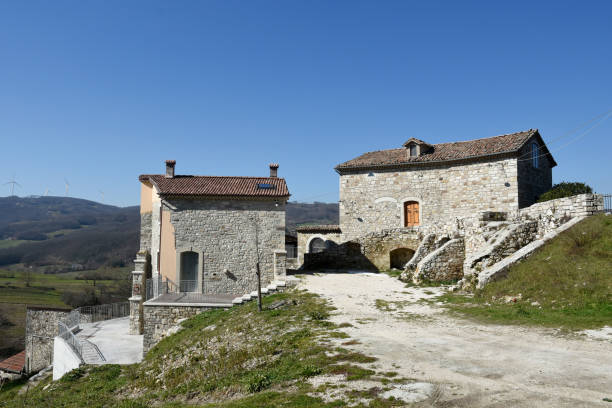
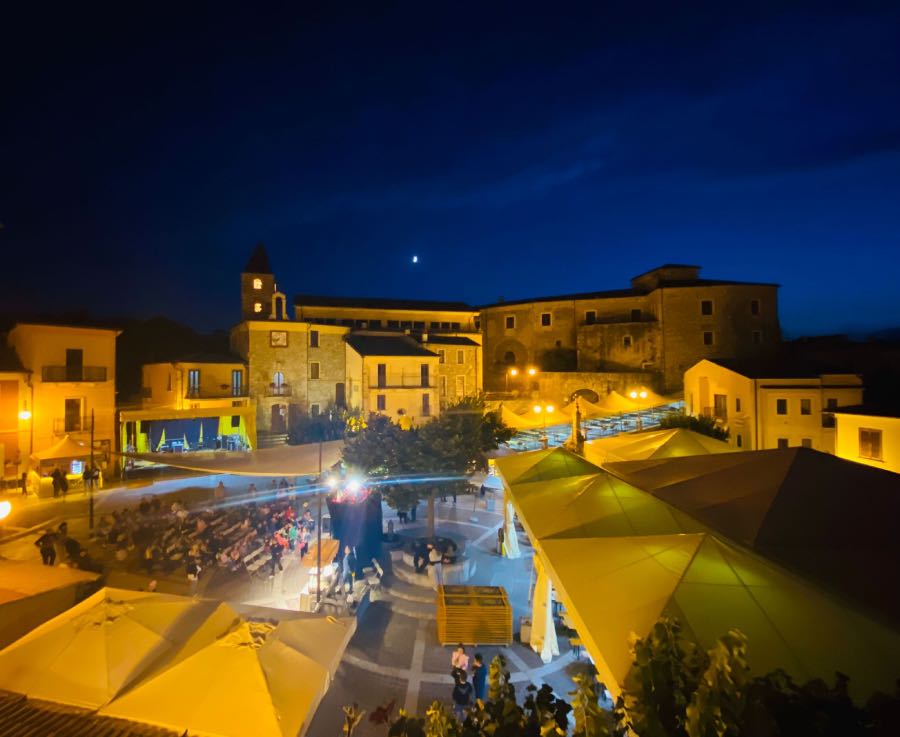
Castelpagano, a municipality with 1,350 inhabitants, is located in the northern part of the province of Benevento, on the border with Molise. The town is situated in a valley near the Tammarecchia stream and consists of two distinct areas that converge in a large central square, one ancient and the other of modern design.
Not to be missed
Religious architecture:
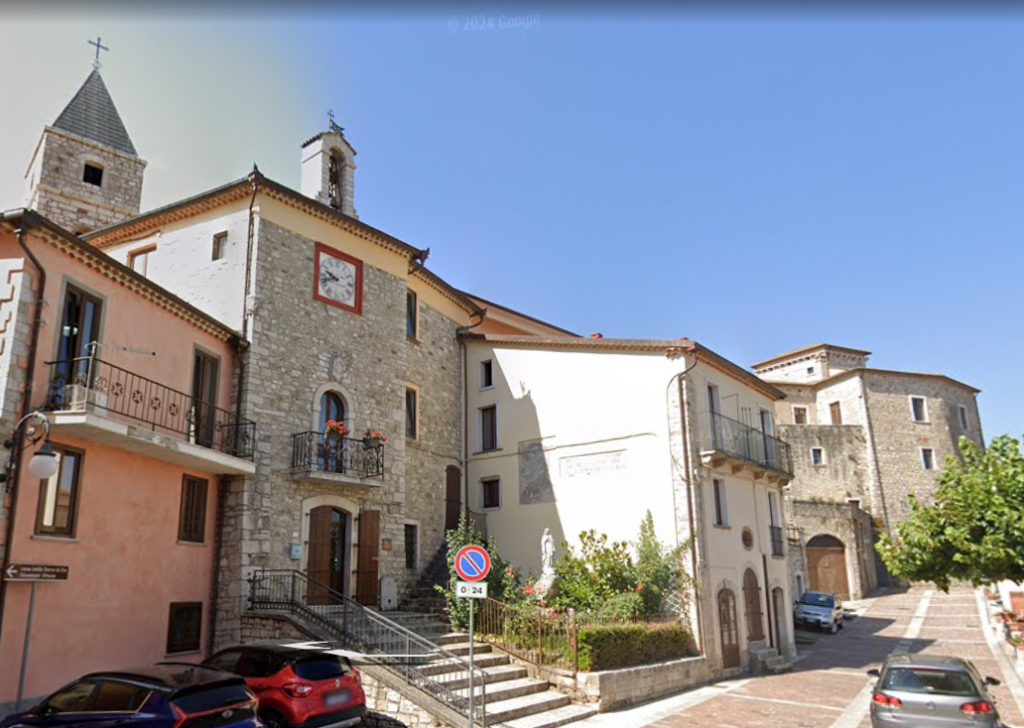
Among the sacred buildings, the Church of the Most Holy Savior, in Romanesque style, stands out, along with the Church of the Sacred Heart of Jesus (1638), recently restored, the 17th-century Church of San Rocco, and the 18th-century Church of Sant’Onofrio. In 1903, the Mother Church was damaged by an earthquake, but the most severe damage occurred in 1962 and 1980: in both cases, more than 50% of the buildings were severely damaged.
The Church of the Most Holy Savior is the mother church of the Castelpaganese religious community. One of the oldest sacred buildings in Christianity in Castelpagano was the first church, of which nothing is known except the title and location. Due to earthquakes, wartime events, and demographic development, it has undergone various renovations and expansions. The date found on a step of the main altar, A.D. 1579, indicates a restructuring.
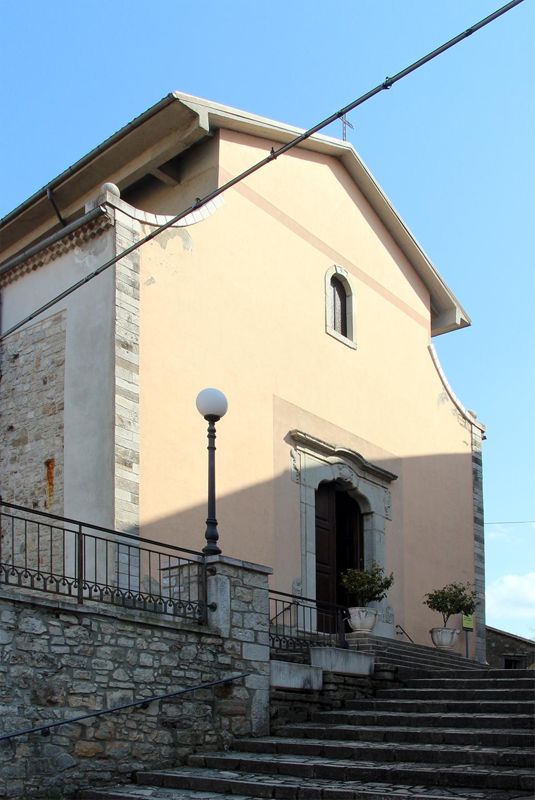
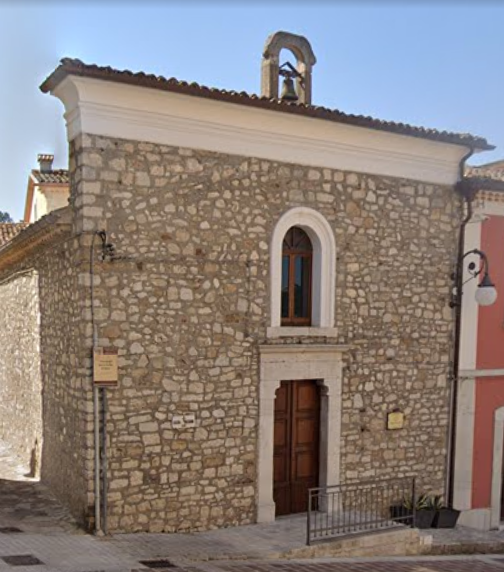
The facade of the Church of the Sacred Heart of Jesus retains its original structure, entirely made of stone, with a projecting cornice that finishes horizontally. In the center is the entrance, framed by a stone portal, above which is a semi-circular arched window.
Civil architecture:
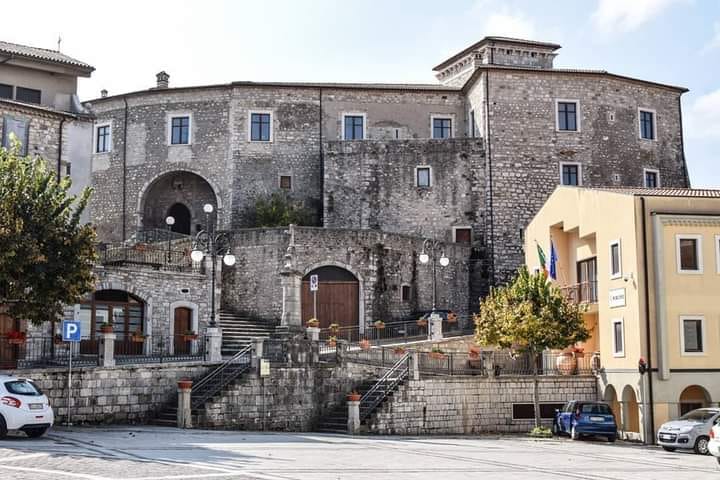
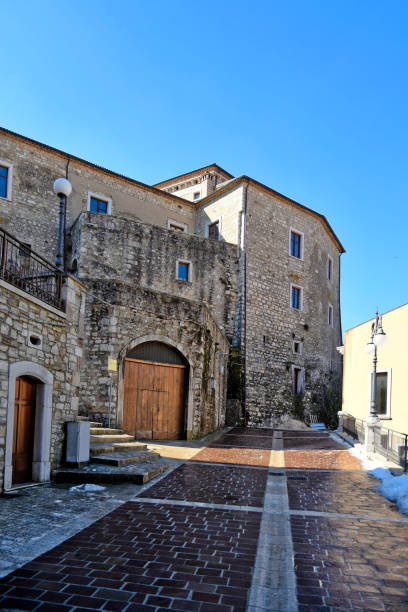
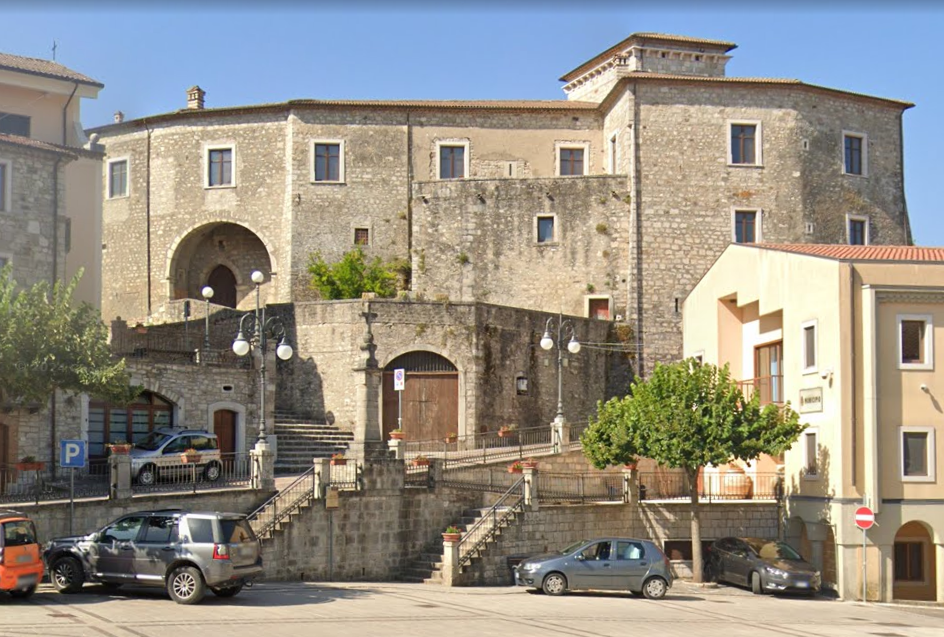
The ducal palace, rebuilt in the 18th century but dating back to the Aragonese period, was originally equipped with four towers and a drawbridge, which have now been lost. Today, the palace serves as a splendid setting for the holding of public and private ceremonies.
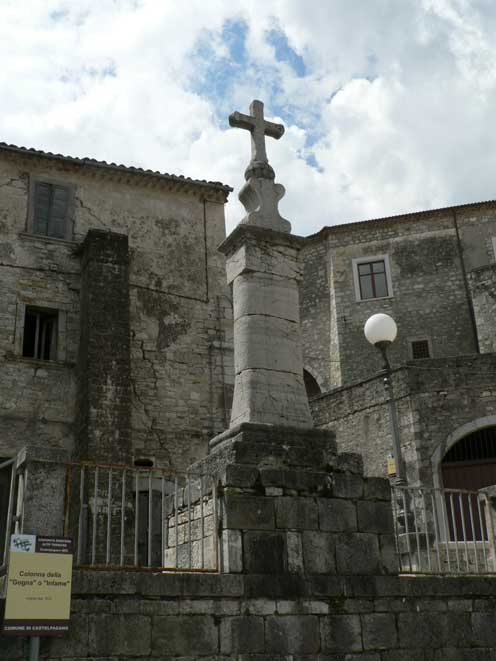
Next to the palace stands a limestone column, the so-called “infamous column,” which was once used for the flogging of wrongdoers. It consists of oval-shaped pieces of white stone, resting on a platform with three steps. The Colonna dell’Infamia, dating back to the 17th century, bears the Latin inscription “flagello stultus sapientor fit” (with the scourge, the fool becomes wise).
A bit of history
The presence of humans in the Castelpagano area is very ancient, documented by post-Schellian stone tools and human fossils found there. The Post-Schellian axe of Castelpagano (preserved in a museum in Rome) is certainly a document of the transitional period between the Paleolithic and the Neolithic in the Sannio region.
The origin of Castelpagano and its inhabited core is further confirmed by two bronze figurines of Heracles (Hercules) found in Castelpagano and preserved in the Museum of Sannio in Benevento. These are examples of Italic art from the Samnite area of the 5th century BC. The origin of the name Castelpagano can be traced to the Roman conquest of the Sannio, as the Romans used towers to defend their garrison stations, forming a defensive system over the territory. The adjective “paganum,” specifying the Castle, suggests that the Romans built the tower (Castle) in the pre-existing pagus (rural settlement), where the worship of Hercules was probably practiced.
There were many cataclysms, such as the earthquake of 369 AD, which erased traces of civilization in the Sannio, and the earthquake of 396, in addition to barbarian invasions. The first certain records of the town date back to its Norman conquest. During this period, it was assigned to the counties of Buonalbergo and Civitate.
Under the Angevins, Castelpagano held great importance, belonging to ruling families, and was a royal domain under the De Caude family, the Burgundians. Certainly, Castelpagano had local autonomy during the Spanish period in the South, as evidenced by the Colonna della Gogna (Gallows Column).
During the time of the Napoleonic dynasty (1806-1815), the municipality of Castelpagano was detached from Colle and aggregated to the district of San Croce del Sannio in 1809. Together with Colle and Cerce Maggiore, it became part of the province of Campobasso, and only later, in 1861, with the Kingdom of Italy, it passed to the province of Benevento.
Curiosity
Among the products to be enjoyed in this historically rich town are the local ham and mushrooms. Both have their own festivals: the Sagra del Prosciutto Paesano (Village Ham Festival) and the Sagra del Fungo Porcino (Porcini Mushroom Festival). The growth of mushrooms is, in fact, favored by the forest located just 7 km from the town center. It features two mountain ponds that support the life of various animal and plant species. The forest is, indeed, an excellent habitat for mushrooms, which can grow abundantly.
Another important event is the feast of St. Anthony of Padua, held on June 26th. After the mass, there is a unique procession in which the statue of the saint is preceded by children from the town wearing Franciscan habits. This tradition dates back many centuries, when there was a Franciscan convent in Castelpagano.
Tour del centro storico